Heavy-Duty Towing in Buffalo, NY: What Vehicles Qualify and What to Expect
This guide covers what heavy-duty towing in Buffalo, NY, actually means, which vehicles qualify, and what to expect from a callout, start to finish.
Buffalo, NY, sits at the crossroads of the I-90 New York State Thruway and the I-190 Niagara Thruway, placing it at the junction of two of Western New York's busiest commercial freight corridors. When a loaded semi or construction vehicle breaks down on one of these routes, a standard tow truck will not do the job. Understanding heavy-duty towing in Buffalo, NY, before you need it can save time, money, and stress.
What Vehicles Qualify for Heavy-Duty Towing?
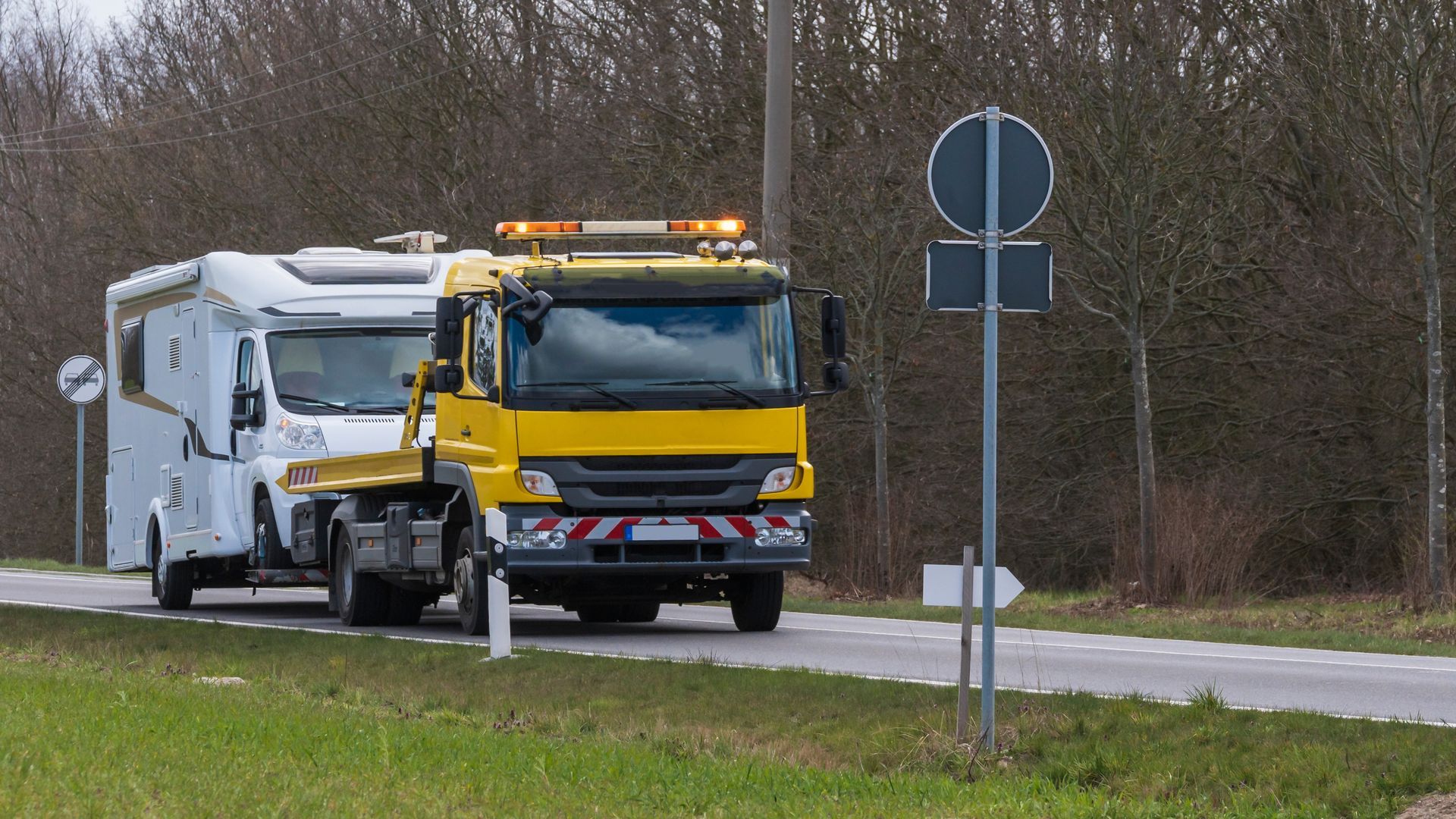
Heavy vehicle recovery applies to any vehicle too large or heavy for a standard light-duty tow truck to handle safely. The Federal Highway Administration classifies vehicles into eight weight classes. Class 7 and Class 8 vehicles, those with a Gross Vehicle Weight Rating (GVWR) above 26,000 pounds, are considered heavy-duty. Common examples include semi-trucks and tractor-trailers, box trucks and large delivery vehicles, buses and motor coaches, RVs and large fifth-wheel setups, construction equipment such as bulldozers and excavators, and mobile homes and trailers.
Medium-duty vehicles in Classes 3 through 6, with GVWRs between roughly 10,001 and 26,000 pounds, may also require specialized equipment depending on the recovery scenario. Always tell the dispatcher your vehicle's GVWR so the right truck is sent.
What Equipment Is Used for Heavy-Duty Towing?
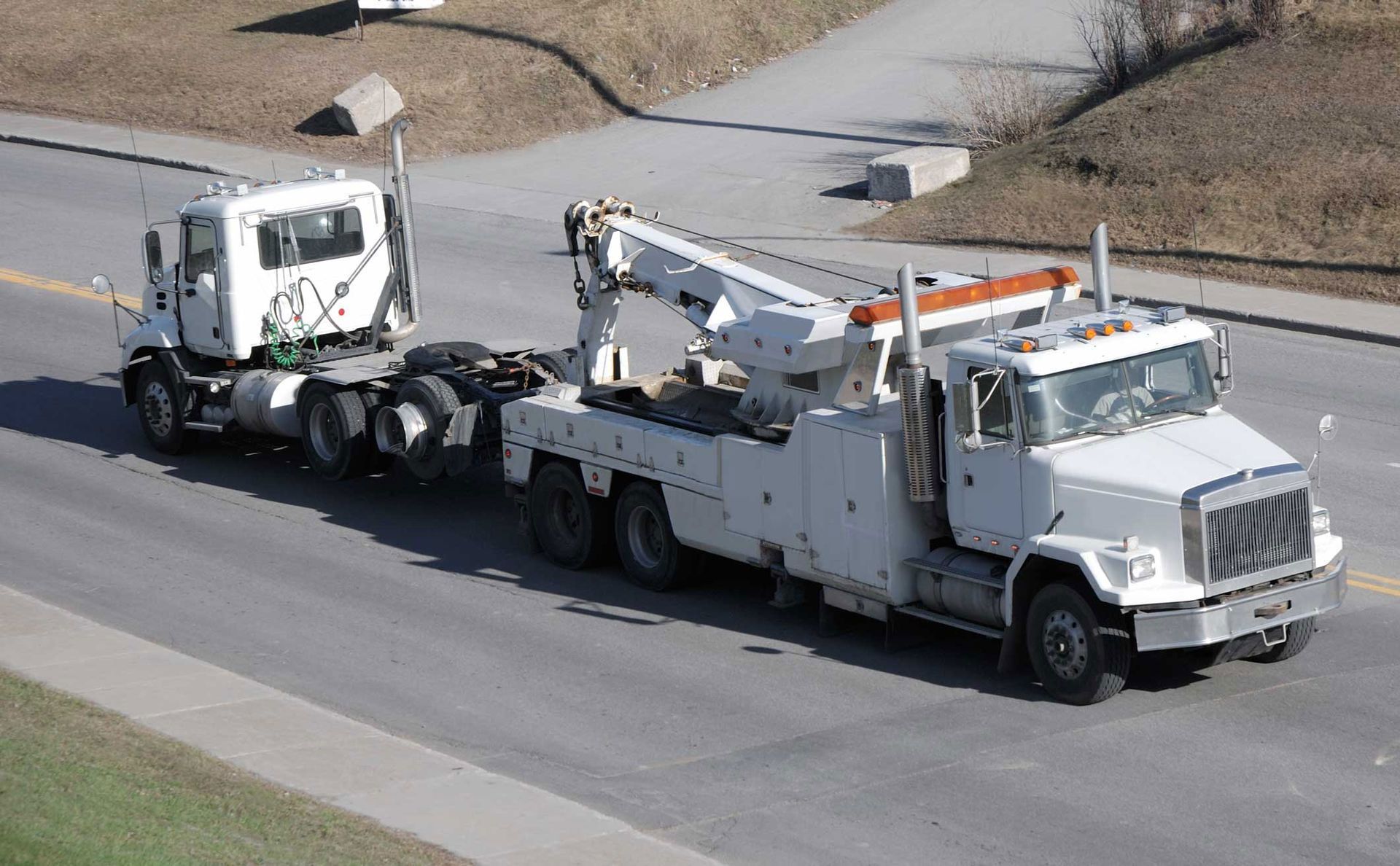
Heavy vehicle recovery relies on three core tools: rotators, underlifts, and lowboys.
Rotator Wreckers
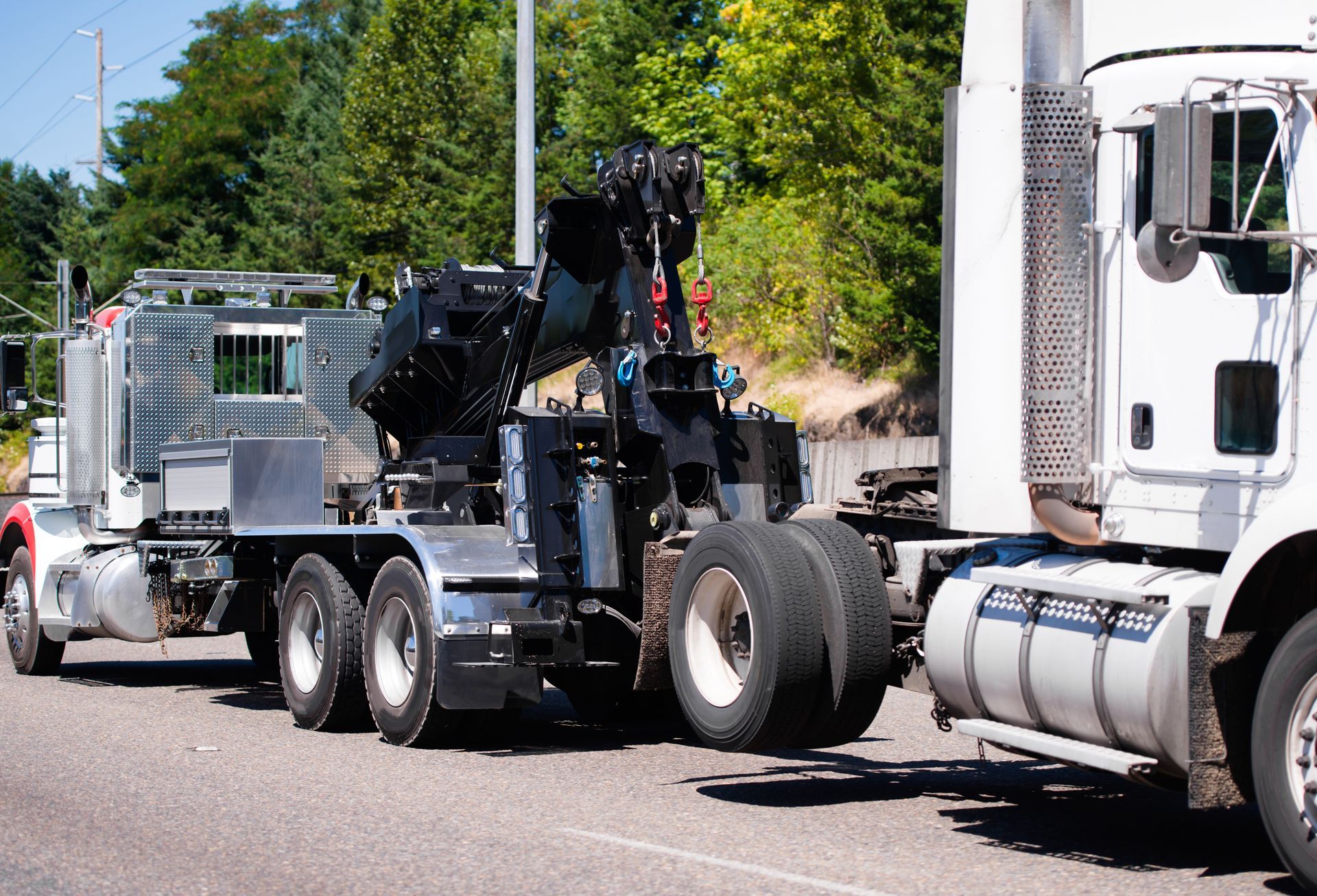
A rotator is a heavy-duty tow truck with a 360-degree rotating hydraulic boom. This design lets operators reach vehicles from any angle without repositioning the truck, which is especially useful along tight highway shoulders on I-90 or I-190. Rotators are commonly used in rollover accidents involving tractor-trailers, with some models handling loads of 50 tons or more.
Underlifts
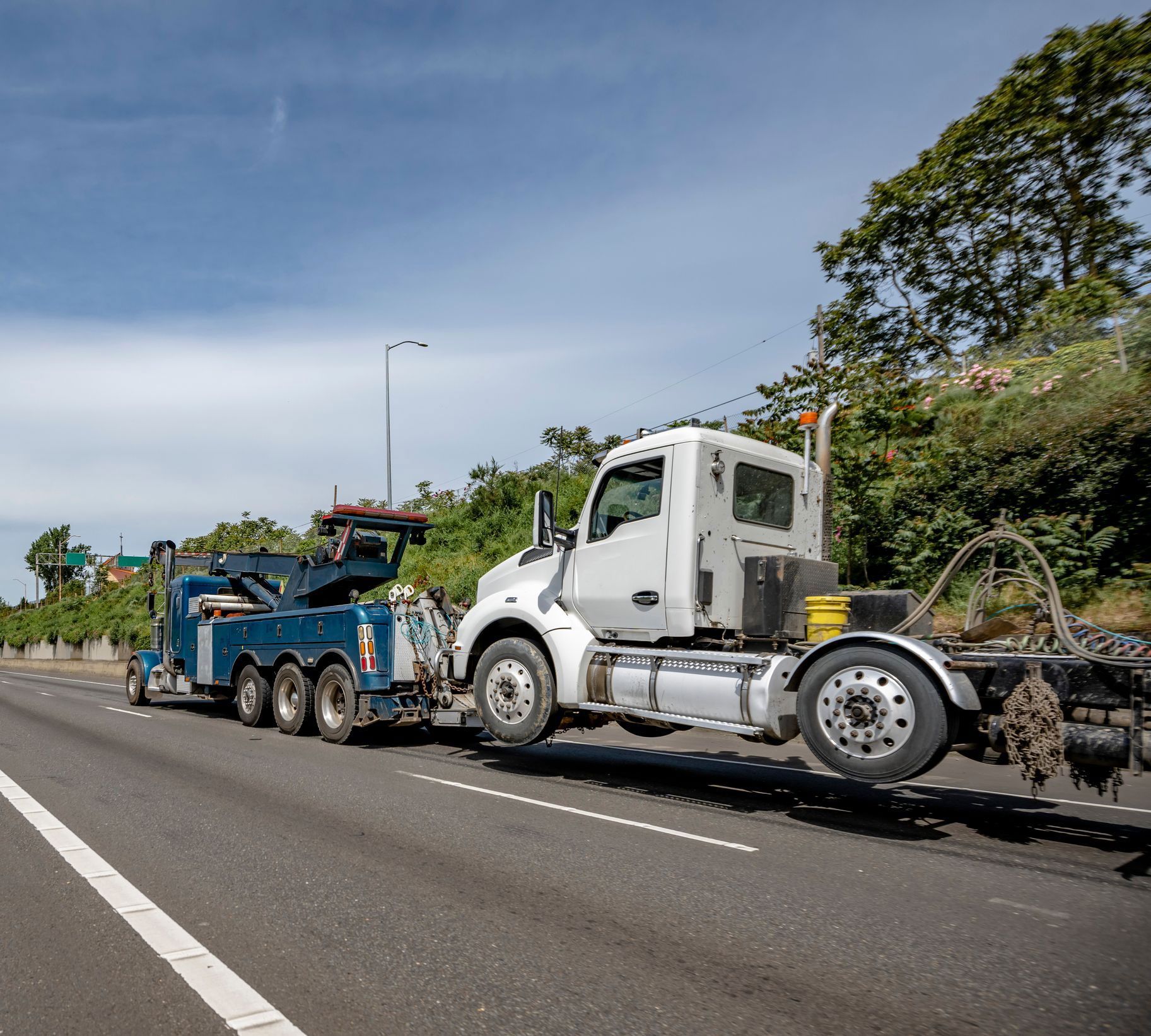
An underlift is a cradle system that slides under a vehicle's frame or axle to lift and carry it without stressing damaged components. Underlifts work well for vehicles with compromised axles or drivetrains that cannot be towed wheel-down, and are a standard feature on most heavy-duty wreckers.
Lowboy Trailers
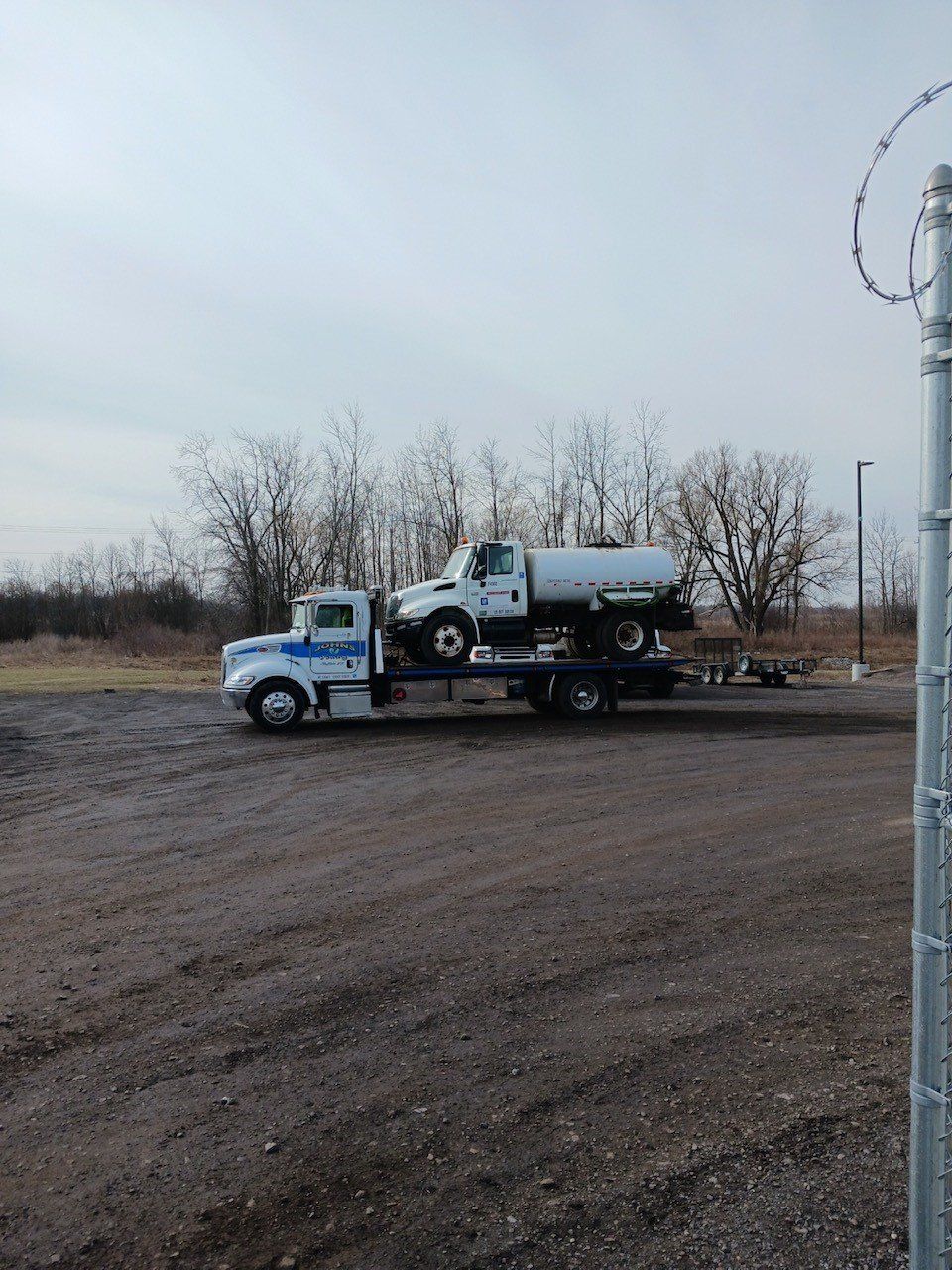
A lowboy trailer sits close to the ground due to two drops in its frame design. This low profile allows it to carry oversized construction equipment that would otherwise exceed New York State's road height restrictions. Lowboys are used when equipment needs to be transported rather than driven under its own power.
What Happens During a Heavy-Duty Callout in Buffalo?
- Scene Assessment. The operator assesses the vehicle's position, cargo load, frame and axle condition, and overhead clearance. On interstates like I-90, lane closures may be coordinated with the New York State Police before any equipment is deployed.
- Equipment Setup. The tow rig is positioned and stabilized using outriggers before lifting begins. Frame chains or straps rated for the specific load are attached to solid structural points. If a rollover is involved, a rotator rights the vehicle before towing begins.
- Transport. Once secured, the vehicle is moved to a repair facility or storage yard. Drivers should confirm the destination in advance and have cargo documentation ready. Buffalo's lake-effect winters can add ice and wind that affect response times, so building in extra time is always a good idea.
What Certifications Should I Look for in a Buffalo Heavy-Duty Towing Provider?
The Towing and Recovery Operator Certification Program (TROCP), developed in partnership with WreckMaster, is the recognized national standard for operator competency. WreckMaster has trained over 40,000 professionals across North America, with Level 6/7 Heavy-Duty Applications being its most advanced certification. Asking whether a company's operators hold WreckMaster or TROCP certification is a reasonable step before authorizing any heavy recovery.
How Does Buffalo's I-90 and I-190 Location Affect Heavy-Duty Towing?
Buffalo's position along the I-190 corridor places the city along a major commercial trucking route. High incident frequency around the I-190 and I-290 interchanges, combined with the Buffalo Skyway's exposure to lake-effect snow and crosswinds, creates challenging conditions. Skyway closures during severe storms push backups onto Tifft Street and the Ohio Street approach. A provider familiar with these corridors and regional dispatch networks makes a real difference in response time.
Is a CDL Required for the Tow Operator Handling My Vehicle?
For Class 7 and Class 8 recoveries, yes. Operators handling vehicles with a GVWR above 26,000 pounds typically must hold a Class A Commercial Driver's License. In complex scenarios such as recovering an overturned tractor-trailer, an oversized load permit may also be required. Verifying correct licensing is a simple step that helps protect you from liability complications.
Choose a Qualified Team for Your Next Heavy-Duty Recovery
When your commercial vehicle or heavy equipment breaks down along Western New York's busiest corridors, you need a towing partner with the right credentials, equipment, and local knowledge. John's Towing has been serving the Buffalo, NY, area since 1979, providing heavy-duty towing in Buffalo, NY, for vehicles of all sizes, including mobile homes, trailers, and tractor-trailers. Visit the towing and hauling service page or explore fleet and heavy-duty tow solutions to learn more. Ready for help now? Call (716) 877-1988 or contact the team online to request service. You can also find and review John's Towing on Google to see what Western New York customers say firsthand.